

One of the less scrutinised aspects of the federal government's economic statement was the fact that taxes on superannuation are running at a much higher rate than expected.
Indeed, Treasurer Jim Chalmers revealed that the superannuation sector would be contributing $10.9 billion extra over the forward estimates - representing a significant boost to the federal government's budget position.
For the 2025-26 financial year an extra $4.3 billion is expected to be collected, rising to $10.1 billion over the four years to 2028-29.
The reason given for such a massive boost is that superannuation contributions are going up significantly due to higher wages, strong employment, and strong investment returns, all of which attract a 15% tax during the accumulation stage of superannuation.
Questions over planned Super “Fraud Tax”
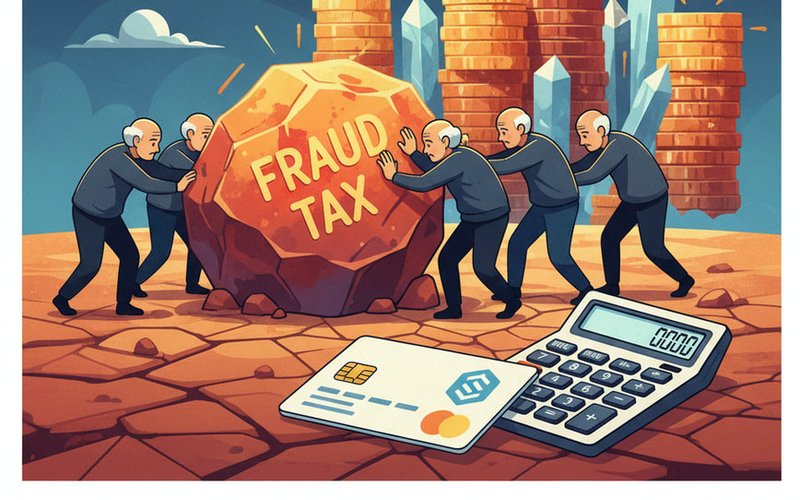
The much better-than-projected numbers in the mid-year economic and fiscal outlook (MYEFO) released in December have also led to requests for a re-examination of plans to effectively put a “fraud tax” on most existing superannuation funds to help meet the costs of bailing out failing super funds.
Traditionally the Compensation Scheme of Last Resort (CSLR) has been paid for by the Government and more recently by the financial planning industry, but the explosion of claims after the collapse of the Shield and First Guardian funds has led to a plan to dramatically broaden that cost collection.
The Minister for Financial Services, Daniel Mulino, has said that all consumer-facing sub-sectors within the financial services sector and all 23 retail-facing subsectors will pay for the $47.3 million CSLR special levy.
Slugging retirees for fraud
That means that some of the money Australians are putting aside for their retirement would end up compensating people for fraudulent super collapses.
Since the latest revelation that the Government’s take from super taxes is dramatically higher than expected, the Super Members Council (SMC) has urged the Government to rethink its decision to push the bill for costs onto Australians with super.
It said getting people who are saving for their retirement to pay this bill would be unfair given the boom in super tax receipts.
“The government is asking poorer Australians, already feeling squeezed by cost-of-living pressures, to help plug a hole in the CSLR due to financial misconduct from others in high-risk products," said the SMC.
The MYEFO, which was released on December 17 and received scant attention due to the Bondi massacre, showed that it is not just super earnings taxation that is rising; company tax is also improving on forecasts.
Company tax also booming
Company tax receipts have been revised upward by $4.3 billion in 2025-26 and by $12.8 billion over the four years to 2028-29, thanks mainly to higher corporate profits.
"The improved outlook for profits is due to both non-mining profits flowing from higher nominal private sector activity and a near-term increase in mining profits reflecting higher bulk commodity and gold prices," the MYEFO said.
While the Government is still forecasting budget deficits, they are lower than expected and have been helped by some policy decisions that have improved the budget position by $2.2 billion over the forward estimates.
Get the wire before the market opens.
The ASX small-cap stories that matter, filed before 9am AEST. Curated by the Small Caps desk.